
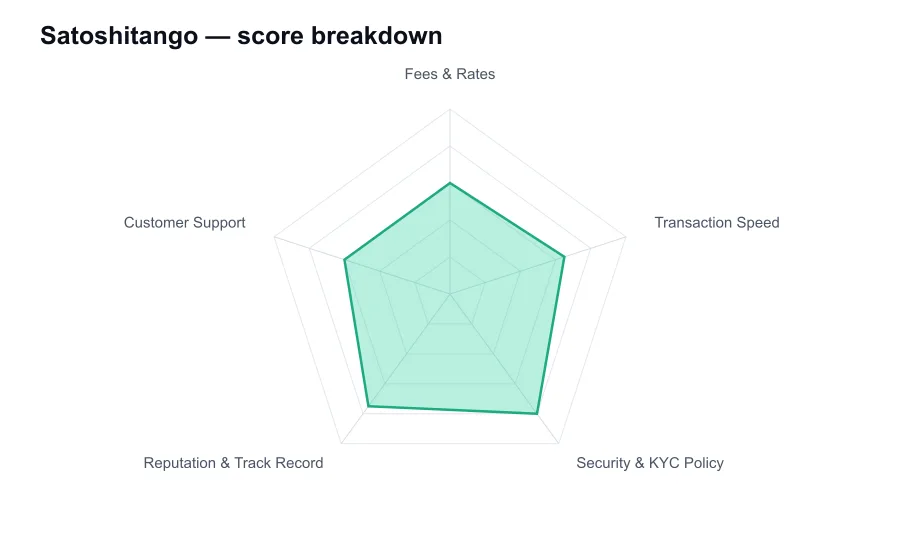
Satoshitango scores 6.9/10 overall in our independent review, measured against every other provider we've compared, strongest on Security & KYC Policy (8.0/10) and weakest on Customer Support (6.0/10).
6.9/10 How we score →Editorial independence: our scores and rankings are produced using the fixed criteria above and are not influenced by advertisers. This is an independent ranking site and is not operated by, or affiliated with, any provider we list.
Affiliate disclosure: some links on this page may earn us a commission at no extra cost to you. This does not affect our rankings.
SatoshiTango is a long-running Latin American crypto platform with deep roots in Argentina. It offers a more familiar account-based experience than a DeFi app, combining crypto buying and selling with wallet functions, local payment options, and services aimed at users navigating pesos, dollars, and regional banking realities. That local focus is its real advantage. It is not trying to beat Binance at every global market.
The platform has operated since 2014, which is meaningful in a sector crowded with short-lived brands. Argentine users have watched payment rails change, exchange controls tighten, and inflation reshape how people think about savings. SatoshiTango has survived those cycles by making crypto accessible through local channels. It has also expanded products over time, including options linked to payments and spending, depending on the country and current offering.
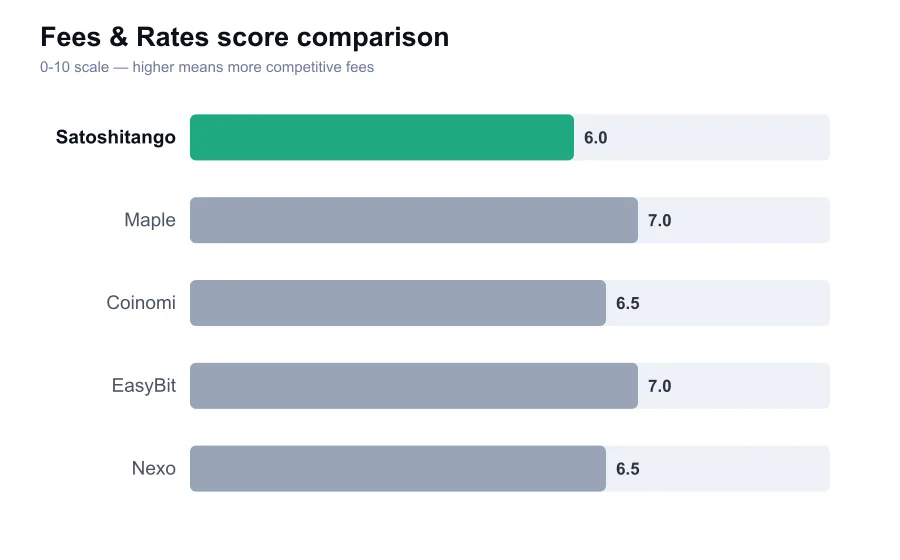
Fees are the area where SatoshiTango requires patience from users. It is not the cheapest venue for a trader comparing raw order-book commissions across international exchanges. The effective purchase price can include a spread, and fiat deposit or withdrawal costs can vary by rail. Card payments, bank transfers, and local cash-oriented methods do not carry the same economics, so a single headline fee would be misleading.
For a user converting Argentine pesos into crypto through a familiar local method, the convenience can justify a less aggressive rate. For a trader moving USDT or Bitcoin several times a day, it usually will not. Compare the final quote against Binance, Bitso, Ripio, and a reputable local peer-to-peer market before completing a large purchase. In volatile periods, the price difference can matter more than a small published commission.
The platform's trading experience is built for accessibility rather than professional market making. Basic conversions are straightforward, and that has value in a market where many customers are entering crypto as a hedge against currency instability, not as speculative day traders. Advanced users should not expect the sort of deep derivatives suite, high-frequency tools, or institutional liquidity available on Binance, Bybit, or Kraken.
Transaction speed depends largely on the route. Internal account updates and crypto conversions are normally quick. Blockchain withdrawals depend on the network selected and on SatoshiTango's own operational checks. Fiat transfers can be quick on local rails during business hours, but they are not always instantaneous, particularly where banks or payment processors impose reviews. A platform can process an order promptly and still be unable to force a bank to settle faster.
SatoshiTango uses a conventional custodial model. The company manages platform wallets and users access balances through their account, rather than controlling every private key personally. That makes the service approachable and enables recovery procedures, but it introduces counterparty risk. If you keep coins there, you are trusting the platform's custody controls, operating policies, and ability to process withdrawals during market stress.
Identity verification is a central feature, not an optional inconvenience. Users should expect KYC checks and compliance questions, especially before accessing fiat rails or higher limits. That is normal for a regulated-facing provider in Latin America. It is a better fit for people who want documented transactions and local banking compatibility than for users who prioritize anonymity or permissionless access.
The company has publicly operated within Argentina's evolving compliance landscape and has presented itself as a regulated service provider where required. That is a positive compared with anonymous offshore websites, but regulation is not a guarantee against operational failure or losses. Customers should separate the value of compliance from the mistaken belief that every balance is government insured. Crypto custody does not work like a protected bank deposit.
Security controls such as account verification and transaction monitoring are useful, but users still need to do the ordinary work. Enable two-factor authentication, use a unique password, and remove long-term holdings to a self-custody wallet if they are not needed for trading or payments. SatoshiTango is more credible than a fly-by-night exchange, yet no custodian deserves blind trust with a life-changing balance.
Reputation is one of its better categories. Remaining visible since 2014 in a difficult regional market is an achievement. The brand is widely recognized among Argentine crypto users and has not built its identity around impossible yield promises or anonymous founders. Its record does not make it globally dominant, but it does make it more established than many local platforms that appeared during the last bull run and vanished afterward.
That said, long tenure does not eliminate user frustration. Reviews of regional exchanges often involve delayed support replies, misunderstandings about payment limits, and disputes over quoted prices. Some complaints are unavoidable consequences of compliance and banking restrictions. Others reflect a service that can feel less polished than the biggest international exchanges. A user who needs instant, unrestricted movement of funds will find the regional financial context constraining.
Support is serviceable rather than exceptional. Help articles and ticket channels cover standard account and transaction issues, while social channels can be useful for status updates. The weak point is urgency. A customer locked out during a price swing may not receive the immediate, high-touch response they want. This is common in crypto, but it is more painful at a platform selling convenience to everyday users.
SatoshiTango makes sense as a bridge between Latin American money and crypto, not as a universal exchange for every purpose. Its local knowledge, longevity, and compliance posture carry real weight. Its pricing can be less attractive than global alternatives, and its custody model calls for restraint. Use it for practical local access, then decide whether the assets belong in your own wallet.
| Criterion | Score (0-10) | Notes |
|---|---|---|
| Fees & Rates | 6.0 | Convenient local rails, but spreads can be less competitive |
| Transaction Speed | 6.5 | Crypto is quick, fiat timing depends on local payment rails |
| Security & KYC Policy | 8.0 | KYC-based custodial service with established compliance practices |
| Reputation & Track Record | 7.5 | Operating since 2014 with strong Argentine market recognition |
| Customer Support | 6.0 | Useful help channels, but urgent cases may take time |
| Pros | Cons |
|---|
Yes. Users should expect KYC checks, particularly for fiat services, account limits, and compliance with local financial requirements.
It can be convenient, but its effective rate may include a spread and payment-method costs. Check the final quote against regional and global alternatives before large trades.
The platform supports crypto withdrawals for supported assets and networks. Confirm the coin, network, withdrawal minimum, and fee carefully before sending.
| Alternative | Score |
|---|---|
| Maple Review | 6.9/10 |
| EasyBit Review | 6.9/10 |
| Nexo Review | 6.9/10 |
| Coinomi Review | 6.9/10 |
| Changelly Review | 7.0/10 |
| Alfacash Review | 6.8/10 |